
Blog
UV Gel vs Gel Polish: Which Service Fits?
Jul
A client asks for “gel nails”, but the service they have in mind may be very different from the service their natural nails actually need. That is where the UV gel vs gel polish conversation matters. Both systems cure in a lamp, create a glossy professional finish and can support long-lasting colour, yet they are built for different results, appointments and price points.
For technicians, choosing correctly is not simply a product decision. It affects service timing, prep, maintenance, removal, client expectations and the condition of the natural nail at the next appointment. A beautifully applied system starts with knowing what it is designed to do.
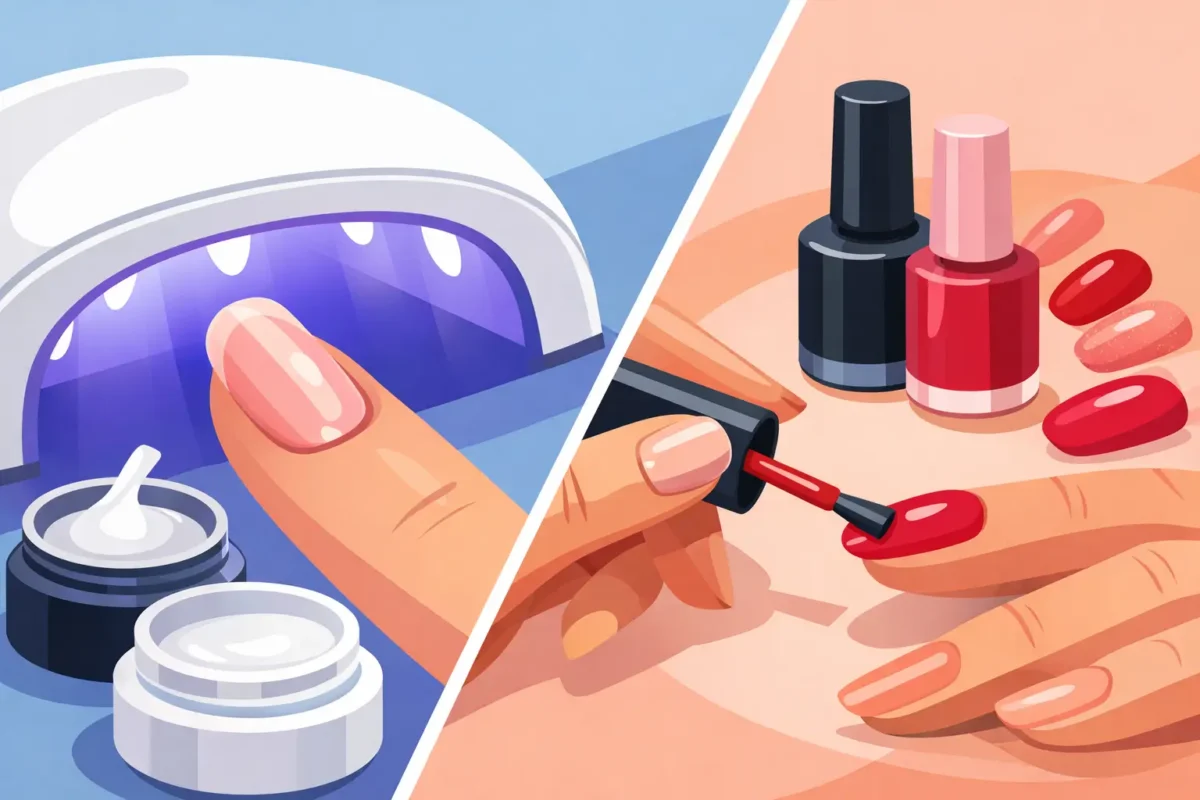
UV Gel vs Gel Polish: The Core Difference
UV gel is generally used to create strength, structure or an enhancement. Depending on the product, it can be used as an overlay on the natural nail, to build an apex, add a small extension or sculpt a longer enhancement with a form. It is a thicker, more substantial material than gel polish and is usually chosen when the nail needs support beyond colour.
Gel polish is a soak-off colour system. It is applied in thin layers over a suitable base, cured in a UV or LED lamp, then finished with a top coat. Its job is primarily to provide durable colour and shine on a natural nail, not to create a significant structure or extension.
The names can cause confusion because many gels cure under UV or LED light. “UV gel” may be used broadly to describe hard gel, builder gel or sculpting gel, while gel polish is also a UV-cured product. Always work from the manufacturer’s intended use, curing instructions and removal guidance rather than relying on the label alone.
When Gel Polish Is the Right Salon Service
Gel polish is ideal for clients with healthy, reasonably strong natural nails who want a polished colour that lasts longer than regular lacquer. It suits clients who prefer short to medium natural nails, enjoy changing shades regularly or want a tidy, high-shine manicure before a holiday, event or busy period.
The application is usually efficient when prep is controlled. After completing the correct manicure and nail preparation, the technician applies thin, even coats. Thin application is not optional: it supports a full cure, avoids wrinkling and keeps the finished nail refined rather than bulky.
A gel polish manicure can look immaculate for two to three weeks, although wear time depends on nail condition, lifestyle, aftercare and application quality. Hairdressers, healthcare workers, hospitality staff and clients who use their hands constantly may experience more stress at the free edge. The answer is not always more product. Sometimes a shorter shape, improved prep or a structured overlay is the better commercial and technical choice.
What gel polish does well
Gel polish delivers exceptional colour payoff, shine and convenience. It is perfect for seasonal colour changes, French finishes, simple nail art and clients who want their own nails to remain the focus. It can also sit over a suitable strengthening layer where the system allows, giving technicians flexibility without losing the crisp finish clients expect.
Its limitation is structure. Gel polish alone is not designed to repair a weak free edge, correct a flat nail profile or hold a long extension in place. Applying extra coats to make it stronger can lead to poor curing, lifting and an unnecessarily thick result.
When UV Gel Earns Its Place
UV gel is the stronger choice where the natural nail requires reinforcement, balance or shape correction. A builder-style gel overlay can help protect nails that flex easily, split at the corners or struggle to retain gel polish. It also gives the technician scope to create an apex, which distributes impact more effectively across the nail.
For extensions, a suitable hard or sculpting gel can be built over a tip or form to create length and structure. This makes it a valuable service for clients who want a more noticeable enhancement, have bitten nails, or need a tailored shape that cannot be achieved with their natural length alone.
The finish can still be beautifully fine. A structured nail should not look heavy or artificial. Product control, correct bead placement, a balanced apex and careful refinement are what create a durable enhancement with a fashion-led silhouette.
Hard gel, builder gel and soak-off builder systems
Not all UV gels behave in the same way. Hard gel is typically filed down during maintenance rather than soaked off. It offers durable structure and is often selected for extensions or long-term enhancement clients. Builder gel may be hard, soak-off or part of a hybrid system, so the product instructions matter.
Soak-off builder systems can offer a middle ground. They provide more support than gel polish while still being designed for removal by the appropriate soak-off method. For clients growing out damaged length or transitioning from a basic gel manicure to a more structured service, this can be an excellent option.
Do not promise soak-off removal simply because a product is called builder gel. Check the technical guidance. A correct service includes a correct removal plan.
Application Is Where Performance Begins
Both systems depend on precise preparation. The natural nail should be sanitised, assessed and prepared according to the product system. Cuticle tissue must be carefully removed from the nail plate, surface shine addressed only as required, and dust eliminated before product application. Product touching skin or cuticle is a common cause of lifting and can increase the risk of sensitisation.
Lamp compatibility is equally serious. Cure each layer for the stated time using the lamp recommended for that formulation. A lamp is not interchangeable merely because it is labelled LED or UV. Incomplete curing can compromise wear and create avoidable safety concerns.
With gel polish, use controlled thin layers and cap the free edge where appropriate. With UV gel, focus on architecture. The product should be balanced to the client’s length, shape and lifestyle. A long almond nail on a client who works with their hands needs a different structure from a short squoval overlay on a desk-based client.
Removal and Maintenance Are Not the Same Thing
Gel polish is commonly removed by carefully breaking the top seal, using the correct soak-off process and gently lifting away softened product. It should never be peeled, bitten or aggressively scraped from the nail plate. Those shortcuts can remove layers of natural nail and leave clients believing that the product itself caused the damage.
Hard UV gel is usually maintained through infills or removed by professional filing. At a maintenance appointment, the technician reduces the existing product, checks for lifting, rebalances the structure and applies fresh gel. This is often more practical than full removal for clients who consistently wear enhancements.
For both services, lifting must be removed rather than covered. Trapping a lifted area beneath fresh product can allow moisture and debris to sit where they do not belong. Professional standards protect the result as well as the client.
Choosing the Best Service for Each Client
The right recommendation comes from consultation, not a one-size-fits-all menu. Ask about the client’s current nail condition, desired length, daily work, hobbies, previous reactions and how often they want to return. A client who wants a new colour every fortnight may love gel polish. A client whose nails bend, crack and catch may gain more from a structured UV gel overlay.
Consider these practical matches:
- Choose gel polish for durable colour on healthy natural nails, regular shade changes and a lighter-feeling manicure.
- Choose a builder or UV gel overlay for added strength, improved balance and clients prone to breakage.
- Choose a hard or sculpting gel for extensions, more substantial length and ongoing infill appointments.
- Choose a soak-off builder system when a client wants extra support but prefers a product designed for soak-off removal.
Pricing should reflect the time, skill and product involved. A structured overlay or sculpted enhancement is not simply “gel polish with more layers”. It requires assessment, technical control, lamp knowledge and often more detailed maintenance. Clear service descriptions help clients understand what they are booking and why it benefits their nails.
Build a Better Service Menu
Offering both systems gives a salon more than two product options. It gives clients a route through their nail journey. Someone may begin with gel polish, move to a strengthening overlay during a growth phase, then return to simple colour once their natural nails feel more reliable. Others will remain enhancement clients because length, shape and durability are central to their signature look.
For students and newer technicians, training is the shortcut to confident product selection. Learn to assess structure, understand product chemistry, recognise lifting early and work within the manufacturer’s system. Nail Gaga’s professional approach is built around that balance of trend-led finish and technically sound application.
The most valuable recommendation is the one that suits the client’s nails today, not the one that sounds most impressive on the booking menu. Give them the right level of strength, the colour they love and a realistic maintenance plan, and their next appointment becomes an easy decision.
