
Blog
Can BIAB Damage Nails? The Professional Answer
Aug
A perfectly applied BIAB manicure should leave the natural nail looking supported, polished and ready for its next appointment – not thin, sore or flaky. Yet clients regularly ask, “can BIAB damage nails?” The honest professional answer is that BIAB itself is not automatically damaging. Damage is usually caused by unsuitable application, over-filing, lifting being picked, incorrect removal, or an adverse reaction to gel products.
For nail technicians, that distinction matters. BIAB can be a brilliant service for clients who want strength with a natural finish, but it is not a one-size-fits-all treatment. Nail health comes from product knowledge, controlled technique and knowing when a client needs a break, a repair plan or a referral.
Can BIAB damage nails when it is applied correctly?
BIAB, short for builder in a bottle, is a brush-on builder gel designed to add structure and support to the natural nail. Depending on the formula and application, it can be worn as an overlay, used for a short extension, or finished with gel colour. It is popular because it creates a clean, wearable enhancement without the bulk some clients associate with traditional extensions.
When the correct system is used, cured fully in a compatible lamp and removed with care, BIAB should not damage a healthy natural nail. It does not need aggressive prep to adhere, and it should never require the nail plate to be filed thin. A well-maintained overlay can also help clients protect nails that repeatedly catch, split or peel during day-to-day wear.
That said, “BIAB” is often used as a catch-all term. Different builder gels vary in flexibility, strength, removal method and lamp requirements. Some are soak-off; others are designed to be reduced by file. A technician should always work to the individual product instructions rather than assuming every bottled builder gel behaves in the same way.
What actually causes damage beneath a BIAB manicure?
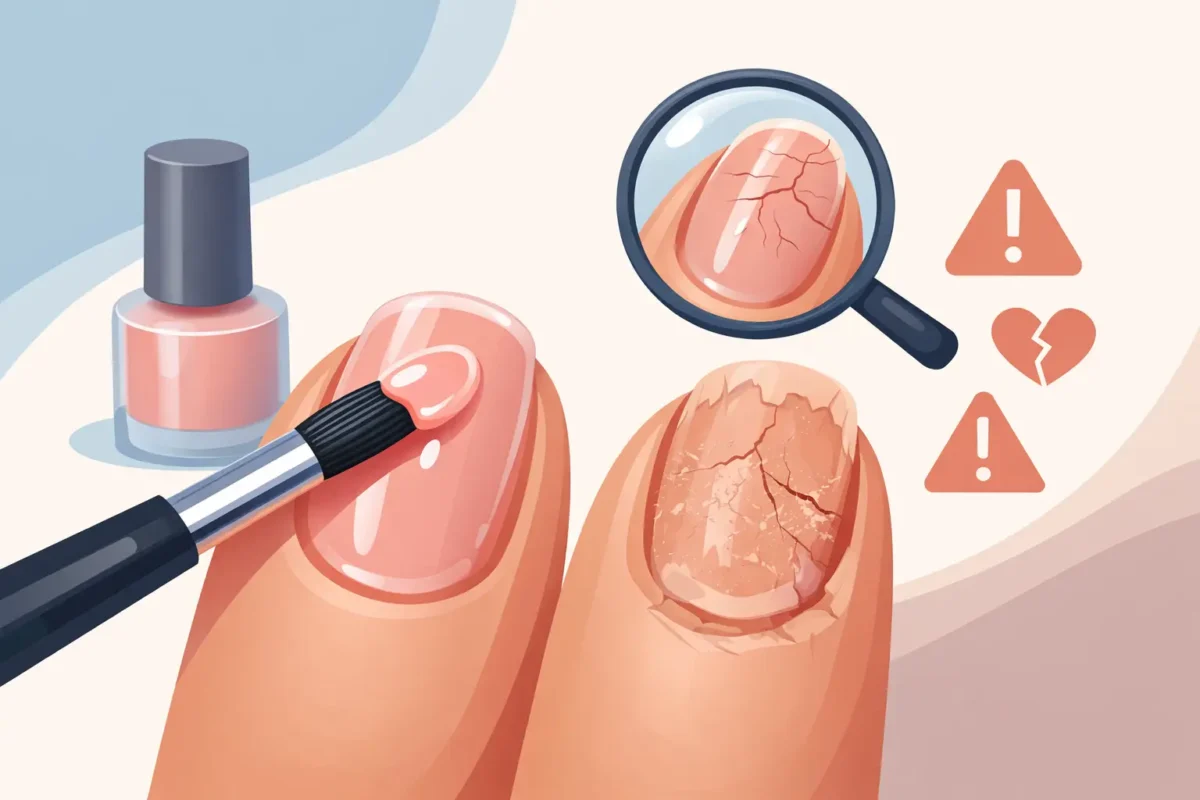
The most common cause is mechanical damage. When a product is peeled, bitten or pulled away after lifting, it can take layers of the natural nail with it. The client may then see white patches, roughness and thinning, and assume the gel caused the issue. In reality, the damage happened when the enhancement was forcibly removed.
Over-prepping is another frequent problem. The natural nail only needs surface shine removed where the system requires it. Heavy buffing, deep cuticle work and repeated use of a coarse file can compromise the nail plate before the BIAB is even applied. More prep does not mean better retention. Clean, precise prep is the professional standard.
Incorrect removal can create the same result. Filing through product without control, scraping softened gel from the nail, or rushing an infill appointment can leave nails tender and uneven. If a client wants a complete removal, the product must be reduced or soaked off according to its formulation, with patience and minimal pressure on the natural nail.
Lifting matters too. A small lifted edge is not just a cosmetic issue. Water, oils and debris can enter the gap, while catching encourages the client to pick at it. Address lifting promptly at maintenance appointments and advise clients not to glue, trim or pull product at home.
Allergies and sensitivity are not the same as nail damage
A client can have a structurally healthy nail and still develop an adverse reaction to gel products. Redness, itching, swelling around the nail folds, blistering, cracked skin or persistent tenderness should never be dismissed as normal. These can be signs of contact dermatitis or allergy and require the service to stop.
Uncured product on the skin is a major avoidable risk. Apply in thin, controlled layers, keep the product away from the cuticle and sidewalls, and clean any flooding before curing. Do not use a lamp that has not been confirmed as suitable for the gel system, and do not guess curing times. Under-curing can leave uncured material in the coating and increase the chance of exposure.
A patch test is not a guarantee that a client will not react. If an allergy is suspected, remove the product carefully where appropriate and advise the client to seek advice from a pharmacist, GP or dermatologist. Reapplying a gel service to “see if it settles” is not a professional solution.
The preparation that protects natural nails
Strong BIAB retention starts long before the builder gel is brushed on. Begin with a consultation that checks for broken skin, nail separation, discolouration, infection concerns, recent reactions and the client’s habits. A client who gardens without gloves, works with cleaning chemicals or picks at their nails may need a shorter, more practical shape and more frequent maintenance.
Sanitise hands, assess the nail plate and carry out gentle cuticle work. Remove non-living tissue from the plate without overworking the eponychium or surrounding skin. Use a light touch when refining shine, then remove dust thoroughly before applying the products specified by the system.
Product control is where salon results are made. Keep the first layer thin, build structure where the nail needs support and avoid creating excessive thickness at the free edge. A balanced apex and tidy sidewalls help the enhancement absorb everyday knocks without putting stress on the natural nail underneath.
For professionals building a reliable BIAB menu, training is as valuable as product choice. Nail Gaga supports technicians with salon-focused education alongside professional formulations, because a fashionable finish only performs properly when the technique behind it is sound.
Maintenance is better than repeated full removals
For many suitable clients, regular infills are kinder to the natural nail than removing and reapplying a full set every few weeks. At a maintenance appointment, reduce the existing product safely, remove any lifted areas completely, rebalance the structure and assess the nail before applying fresh product.
Timing depends on nail growth, lifestyle, length and the condition of the enhancement, but two to four weeks is a common maintenance window. Clients with very active hands or longer overlays may need to return sooner. Waiting until the overlay has grown far beyond its balance point raises the risk of breaks, cracks and accidental trauma.
Clients should also know that BIAB is not a substitute for sensible aftercare. Cuticle oil helps condition the surrounding skin and keeps the enhancement looking fresh. Gloves are useful for washing up, cleaning and chemical-heavy work. Nails are tools for nail art, not for opening cans, scraping labels or prising things apart.
When should a client take a break from BIAB?
A planned break is not always necessary simply because someone has worn BIAB for months. Healthy nails do not need to “breathe” – the nail plate is made of keratin and receives what it needs through the bloodstream, not through exposure to air. However, a break can be sensible if there has been over-filing, repeated breakage, persistent lifting, tenderness, a suspected reaction or a client simply wants to grow out damage from previous removal.
During that time, keep nails short and gently shaped, use cuticle oil consistently and avoid hardeners or home treatments that make brittle nails even less flexible. If nails are painful, green, significantly discoloured, separating from the nail bed or showing signs of infection, do not cover them with BIAB. Refer the client for appropriate medical advice.
A professional BIAB service is built on judgement
The question is not simply whether BIAB can damage nails. It is whether the product, nail condition, service plan and technician’s technique are right for that individual client. A soft, short natural nail may benefit from a flexible structured overlay; a client with a suspected gel allergy needs a completely different conversation.
Treat every appointment as an assessment, not a production line. With gentle prep, correct curing, controlled removal and clear aftercare, BIAB can remain one of the most commercially valuable and beautifully wearable services on a nail menu – Fashion For Fingers, with the nail health to match.
