
Blog
Professional BIAB Kit Review for Salon Techs
Aug
A professional BIAB kit review should look beyond the shade chart. Builder in a bottle has become a high-demand salon service because clients want strength, a polished finish and natural-looking nails without the bulk of an enhancement. But the result is only as good as the system behind it. For working nail techs, a kit must support reliable prep, controlled application, correct curing and efficient removals – not simply provide a few attractive bottles.
A well-chosen BIAB kit can streamline appointments, make training easier and give your salon a consistent standard across every technician. A poorly matched kit can lead to lifting, heat spikes, under-curing concerns and a service that takes longer than it should. Here is what separates a professional setup from a starter bundle that looks good but does not earn its place on your nail desk.
What a Professional BIAB Kit Should Include
At its core, BIAB is a soak-off builder gel supplied in a bottle format. It is designed to add structure and strength to natural nails, create a smooth overlay, support short extensions where suitable, and provide a clean base beneath gel colour or nail art. The convenience is obvious, but professional performance relies on the full service system.
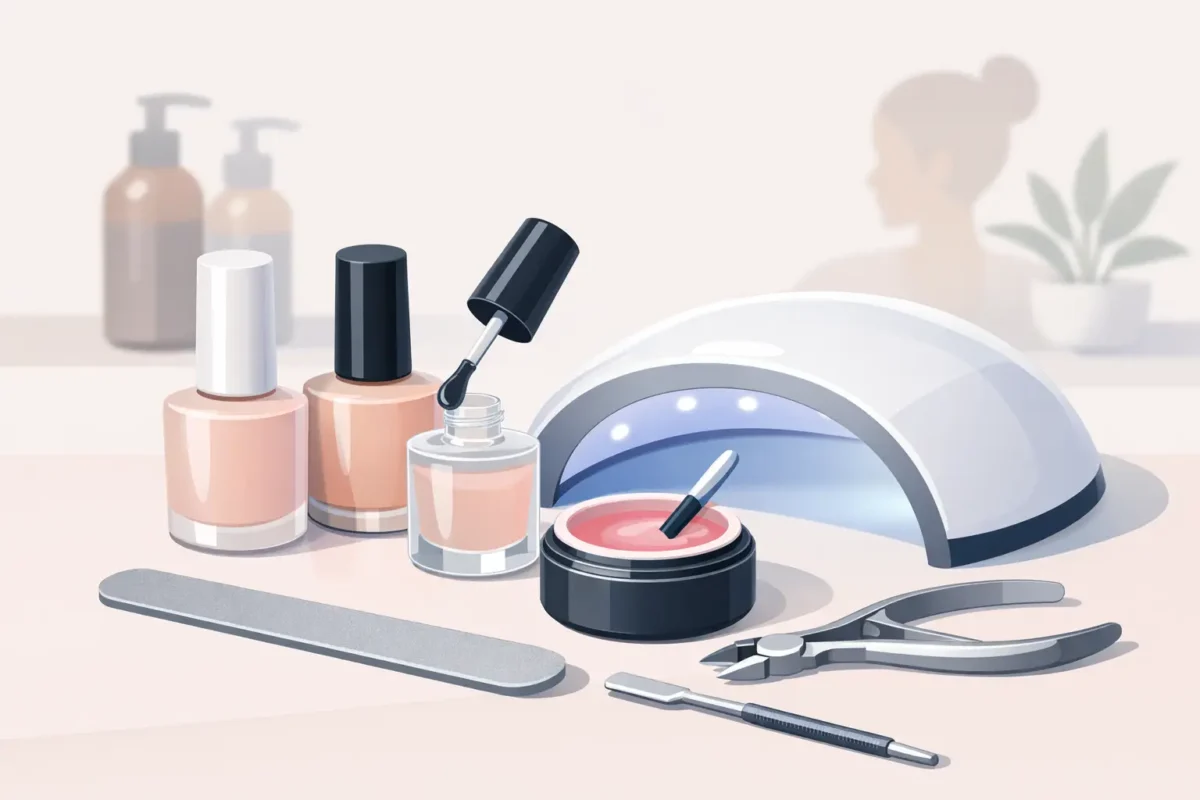
A capable kit should include more than builder gel shades. It needs the products that protect adhesion and finish: a suitable prep solution, dehydrator where required by the system, primer if recommended, base gel, builder gel, top gel and a lamp compatible with the formulation. Professional tools matter too. A quality application brush, file selection, buffer, lint-free wipes and removal products may sound like basics, but these are where service consistency is often won or lost.
The best kits make the working order clear. If a product requires a base layer, that should be stated. If a particular top gel is needed for a high-gloss finish or a no-wipe result, technicians should not have to guess. Clear system guidance is especially valuable for salons with junior staff, colleges and mobile techs who need repeatable results away from a familiar desk setup.
Professional BIAB Kit Review: Gel Performance First
The builder gel itself should be the centre of any review. Colour range is commercially important, particularly for clients who favour sheer pinks, milky nudes, soft peach tones and French manicure bases, but formula behaviour deserves more attention.
A professional BIAB should offer enough body to self-level without flooding the sidewalls and cuticle area. If it is too thin, creating an apex can become frustrating and product may run before the hand reaches the lamp. If it is excessively thick, application can feel slow and brush marks may need extra refinement. The right viscosity depends partly on your working style, room temperature and client nail type, so there is no single formula that suits every technician.
Look for controlled self-levelling rather than a gel that races across the nail plate. This gives you time to place product precisely, particularly when working on short natural nails or rebuilding a weak free edge. A good builder gel should also allow a thin slip layer followed by a structured bead, helping you create strength where it is needed without leaving the finished nail bulky.
Pigmentation matters in coloured builders. Sheer shades need to apply evenly without patchiness, while fuller coverage shades should cure properly in the recommended layers. Do not judge opacity only by a swatch. Test how the product performs on different nail lengths, under salon lighting and over a complete appointment. A shade that photographs beautifully but takes three coats to look even may not be the best choice for a busy schedule.
Strength is not the same as stiffness
Clients often ask for strong nails, but rigid is not always better. Natural nails flex, especially on active clients and those with longer lengths. A builder gel needs an appropriate balance of strength and flexibility so it can support the natural nail rather than work against it.
This is where client consultation earns its value. A short, tidy overlay on a client with healthy nails may need very little structure. A client who works with their hands, has naturally flexible nails or wants to grow out previous damage may benefit from more considered apex placement and maintenance intervals. The kit should give you the control to tailor the service, not force every client into the same application.
Lamp Compatibility Is a Non-Negotiable
No professional BIAB kit review is complete without looking at curing. Builder gels are formulated to cure under specific wavelengths and exposure times. Using an unverified lamp because it is already on the desk is a false economy. A gel can appear hard on the surface while remaining insufficiently cured beneath, which compromises wear and creates an avoidable safety concern.
Use the lamp recommended for the system and follow the stated cure time exactly. Keep the lamp clean, check that the base plate and reflective interior are in good condition, and make sure clients place their hands correctly. Thumbs deserve particular attention, as they are often angled away from the LEDs. Cure them separately when needed rather than hoping a rushed hand position will do the job.
Heat can also affect the client experience. Some people may feel a warming sensation during curing, particularly with thicker applications or damaged nails. This does not mean the service has failed, but it does call for proper technique. Apply controlled layers, avoid unnecessary bulk and ask the client to remove their hand briefly if they experience a heat spike, then return it to complete the cure. Client communication makes this feel managed rather than alarming.
Prep Products Decide the Wear Test
When a BIAB overlay lifts, it is tempting to blame the builder gel. In reality, preparation is often the issue. A professional kit should support a disciplined prep routine that suits the brand’s instructions and respects the natural nail.
The nail plate must be clean, free from shine where required, and clear of non-living tissue at the cuticle area. Product placed over cuticle will lift, regardless of how premium the gel feels in the bottle. Avoid over-buffing or aggressive filing. The aim is to create a clean, suitable surface, not thin the natural nail in pursuit of adhesion.
A complete system reduces the temptation to mix products from different brands without understanding their chemistry. Many experienced technicians do mix selectively after testing, but a salon should not make compatibility assumptions with a new service. If wear problems develop, using one coherent system makes troubleshooting much easier. You can assess prep, application, cure and aftercare in a logical order.
Is a Full Kit Better Than Buying Separately?
For a technician adding BIAB to an existing gel service menu, buying selected products may make commercial sense. You may already own compatible professional tools, a suitable lamp and prep products you trust. In that case, the priority is choosing builder shades and finishing products that fit your service style.
For beginners, colleges or salons standardising training, a complete kit is usually the stronger option. It provides a defined workflow, reduces compatibility questions and makes it easier to teach correct product use. It can also help you price the service accurately because you know what each appointment requires from the start.
Value should not be judged by bottle count alone. A cheaper kit can become expensive if it misses a crucial step, includes shades that do not suit your clientele or needs replacing after only a handful of services. Consider the practical cost per appointment, the range of looks you can create and whether the system supports infills, removals and retail aftercare conversations.
Service Results That Clients Notice
Clients may not ask about viscosity or photoinitiators, but they notice the outcome. They want a flattering shape, a smooth apex, no lifting at the cuticle and a finish that stays glossy until their next appointment. A professional BIAB service should feel refined, not thick or overworked.
That is why technique and product knowledge belong together. Nail Gaga builds its Fashion For Fingers approach around professional products and practical education because trend-led nails still need technically sound foundations. A soft nude BIAB overlay can be a premium standalone service, a base for chrome or art, or the start of a polished French set. The kit should make those service upgrades easy to deliver without compromising structure.
Photograph your results after one, two and three maintenance appointments. This gives you a more useful assessment than a first-day finish. Check for tip wear, sidewall lifting, changes in colour and how the builder performs during removal or rebalance. Your own client record will quickly reveal whether the system is right for your salon.
A professional BIAB kit is worth investing in when it makes your work more precise, your timings more dependable and your clients more confident returning with healthy-looking nails. Choose the system you can apply correctly, cure confidently and teach consistently – then let your finish do the selling.
