
Blog
Hard Gel vs Soft Gel: Which Nail System Fits?
Aug
A client wants length, another needs a natural-looking overlay, and the next has booked a quick soak-off before her holiday. The hard gel vs soft gel decision affects far more than the product on your brush. It shapes your prep, application time, removal method, maintenance appointments and, ultimately, the service experience your client remembers.
For professional nail technicians, there is no universal winner. Hard gel and soft gel each earn their place on a well-built treatment menu. The smartest choice comes from matching the system to the client’s natural nails, lifestyle, desired finish and willingness to return for infills.
What is hard gel?
Hard gel is a UV or LED-cured enhancement product designed to create durable structure and length. Once cured, it cannot be removed by soaking in acetone. It must be carefully filed down, either to remove the enhancement completely or to leave a thin protective layer before a new application.
It is commonly used for sculpted extensions over a form, overlays on natural nails and structured enhancements that need to hold a strong apex. A well-applied hard gel set can look refined rather than bulky, but that strength depends on correct architecture. Product placement, sidewall balance and a tailored apex matter just as much as the gel itself.
Hard gel is particularly useful for clients with longer nails, active jobs or a habit of putting their nails through more than they should. Think hairdressers, hospitality staff, busy parents and clients who want a statement shape that holds up between appointments. It can also be an excellent base for detailed nail art, chrome finishes and fashion-led designs where a stable canvas makes all the difference.
The hard gel service model
Hard gel usually suits clients who are happy to commit to maintenance. Rather than soaking off at every appointment, the technician rebalances the enhancement with an infill. This can be efficient and commercially sensible when the existing product is sound, with no lifting, cracks or signs of service breakdown.
That said, infills are not simply a shortcut. The previous structure needs assessing carefully. If the client has significant lifting, trauma, product breakdown or a change in nail health, a controlled removal and fresh set may be the better professional decision.
What is soft gel?
Soft gel is a soak-off gel system. After curing, it can be softened with acetone and removed without filing away the entire enhancement. Soft gels include many builder gels and soak-off strengthening gels used for natural nail overlays, short extensions and structured gel manicures.
The term can also refer to full-cover soft gel tips. These pre-shaped extensions are adhered with a compatible soft gel product, cured under a lamp and removed by filing through the top layer before soaking off. They are not the same thing as a soft gel overlay, but both sit within the soak-off category.
For clients who prefer shorter nails, want a flexible overlay or like changing their look often, soft gel can be a brilliant fit. It offers a cleaner route for colour changes and complete removals, especially when the system is applied in thin, controlled layers and paired with correct prep.
The soft gel service model
Soft gel services can feel more flexible for clients who do not want a long-term enhancement commitment. A client can enjoy added support over natural nails, then return for a soak-off and a fresh application when she is ready for a different colour or shape.
Flexibility is a strength, but it is not permission to skip maintenance. Soft gel still needs careful prep, proper curing and a structured application suited to the client’s nail length. Overloading the nail with product to imitate a hard gel extension can lead to bulk, instability and premature lifting.
Hard gel vs soft gel: the practical differences
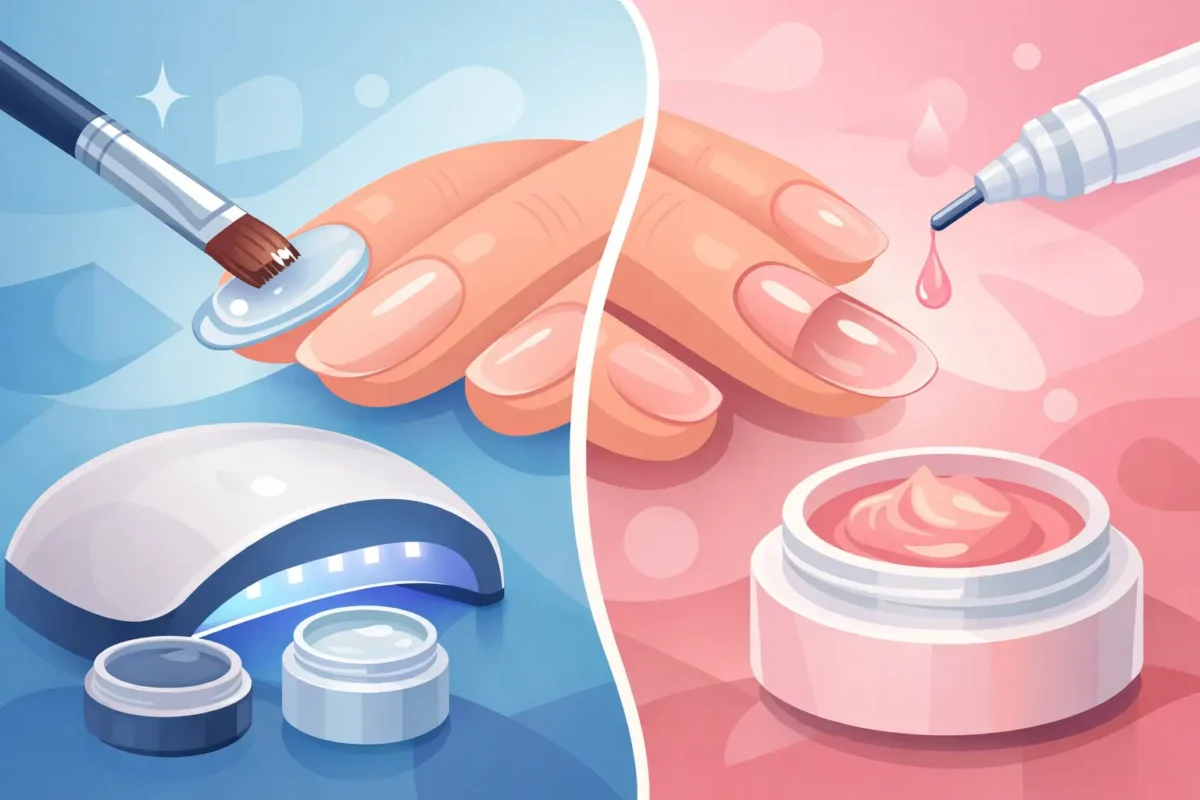
The main difference is removal. Hard gel is file-off; soft gel is soak-off. From there, the systems behave differently in ways that affect both service design and client expectations.
Hard gel generally offers greater rigidity and is better suited to sculpting longer extensions or supporting clients who need a highly structured nail. Its resistance to acetone makes it ideal for infill-based services, but removal requires confident electric filing or hand-filing technique. Technicians should never rush this stage. Excessive filing can generate heat, thin the natural nail and damage client trust.
Soft gel tends to have more flexibility, although formulas vary. It is often a strong choice for overlays, short-to-medium lengths and clients who want the option of full removal. Its soak-off nature can make it more approachable for newer clients, but acetone removal still takes time and needs to be performed with care. Picking, peeling and forcing product from the nail plate is never acceptable.
Wear can depend less on the label and more on the full application process. Nail plate preparation, appropriate product amount, lamp compatibility, curing times and aftercare all influence retention. A poorly prepared hard gel set will lift. A correctly applied soft gel overlay can wear beautifully for weeks.
Choose hard gel when structure is the priority
Hard gel is usually the stronger choice when a client wants sculpted length, a dramatic almond or coffin shape, or a durable enhancement that can be maintained through regular infills. It suits technicians who are comfortable building a precise apex and tailoring structure to each nail rather than relying on a one-size application.
It is also worth considering for clients whose nails are naturally long but bend or split at the free edge. A structured hard gel overlay can provide the support needed to keep their natural length looking polished. The goal is not to make every nail feel rigid. It is to create balanced reinforcement that works with the client’s lifestyle.
Be clear during consultation: hard gel is not a quick peel-off product. Explain that ongoing appointments involve rebalancing, and complete removal is a professional filing service. Clients who understand the commitment are more likely to follow the right maintenance plan.
Choose soft gel when flexibility matters
Soft gel is often the right fit for clients who love a neat, natural manicure with added support. It works well for short nails, low-profile overlays and clients moving from standard gel polish into a more structured service. It is also a practical option for those who like to change colours frequently or do not want to commit to regular infills.
Full-cover soft gel tips can be especially useful when speed and consistent shaping matter. They can create a polished extension efficiently, provided the tip is correctly sized, the cuticle area is fitted neatly and the client is given realistic aftercare advice. They are not a substitute for assessing nail shape or correcting unsuitable prep.
Soft gel may be less suitable for a client requesting extreme length, very sharp shapes or a highly rigid enhancement. In those cases, forcing a flexible system beyond its intended role can produce cracking, breakage or lifting. Matching product performance to the service request protects both your reputation and the client’s natural nails.
Consultation decides the system, not the trend
A fashionable finish may bring a client to the chair, but consultation tells you what her nails actually need. Ask about her work, hobbies, previous enhancement history and how she uses her hands. Find out whether she wants to maintain her nails with infills, remove everything regularly or grow out natural damage beneath an overlay.
Check the nail plate and surrounding skin before starting. Signs of infection, inflammation, unexplained discolouration or severe damage require a pause, not a product solution. Professional standards include knowing when not to proceed.
Then consider the design. A sheer BIAB-style look on short natural nails may only need a soft gel overlay. A long, embellished set with a crisp high apex may call for hard gel structure. The best result is not the trendiest system on the shelf. It is the one that gives the client beautiful wear without asking the product to do a job it was not made to do.
Application and removal are where reputation is built
Whether you choose hard gel or soft gel, disciplined preparation remains non-negotiable. Cleanse and sanitise appropriately, complete a careful cuticle prep, remove shine only where required and avoid over-filing the natural nail. Follow the system instructions for base products, layer thickness and lamp curing.
For hard gel, keep the enhancement balanced and avoid flooding the sidewalls or cuticle area. For soft gel, resist the temptation to create strength through unnecessary thickness. In both systems, inspect every nail before curing and check the finished set from side profile as well as from above.
Removal deserves the same care as application. File-off systems need controlled reduction, especially near the natural nail. Soak-off systems need the surface layer broken carefully before acetone exposure, followed by gentle product removal. The client should leave with natural nails that feel respected, not scraped thin for the sake of speed.
Nail Gaga’s Fashion For Fingers approach is about more than a great colour choice. Build your menu around correct product matching, polished technique and advice clients can rely on. When you explain why one system suits their nails better than another, you turn a single appointment into the kind of professional relationship that keeps chairs busy.
