
Blog
Acrylic Powders for Strong, Fashion-Ready Sets
Sep
A pristine French, a glassy nude overlay or a full-colour sculpted stiletto all begin with the same decision: choosing acrylic powders that give you control at the brush. For nail professionals, powder is not simply a shade in a pot. Its particle consistency, pigment level and working behaviour affect application speed, structure, finish and how confidently a client wears the set away from the salon.
The best results come from treating your acrylic system as exactly that – a system. Powder, liquid, preparation, brush technique and filing all work together. Get the formula and ratio right, and your sets can look refined before the top coat even goes near them. Get it wrong, and even the most fashion-forward design can be compromised by lifting, bulk or uneven colour.
What acrylic powders do in a professional system
Acrylic powder combines with monomer liquid to create a workable bead that cures through polymerisation. That bead should be easy to place, responsive enough to guide around the cuticle area and stable enough to build a balanced apex. Once set, it creates the strength needed for extensions, overlays and structured enhancements.
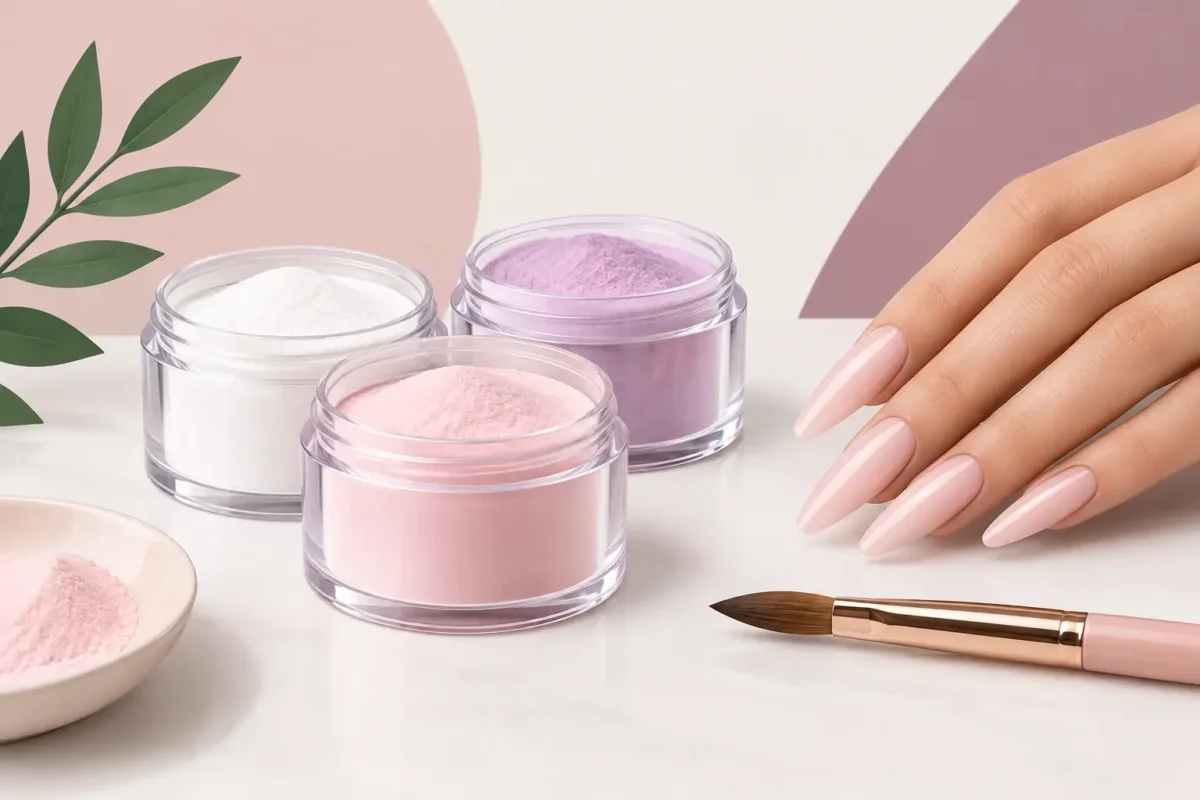
In salon terms, the powder you choose determines far more than the final look. A clear powder supports encapsulated glitter, foils and detailed nail art without clouding the design. Cover pinks and nudes help create a clean nail-bed appearance, disguise minor imperfections and make a French smile line pop. White powders need strong opacity for crisp tips, while coloured acrylics need reliable pigment so the client sees the same impact in daylight as they did at the desk.
A good professional formula should also file smoothly. This matters on a busy appointment day: excessive filing creates unnecessary dust, takes time from your art work and can make it harder to preserve the structure you have already built.
Choosing acrylic powders for the service, not the trend
A bold colour may catch the eye, but service suitability should lead the choice. Think first about what the powder has to do on the nail, then select the shade and finish that deliver the look.
For natural overlays and clients who prefer a polished, understated finish, a clear or translucent pink powder can provide strength without a heavy appearance. A cover powder is often the better option when you need to extend the look of the nail bed or create a more even foundation beneath a French, baby boomer or reverse application.
For sculpted extensions, choose a powder that allows you to form structure without chasing product around the form. Your bead must stay workable long enough for accurate placement, particularly when tailoring sidewalls and building the apex, but it should not remain wet for so long that it floods the cuticle area or loses its shape.
Bright colours, glitters and high-pigment powders suit statement sets, seasonal menus and competition-inspired artistry. They can be used as a full enhancement, a coloured French tip, an ombré accent or encapsulated design. The trade-off is that highly pigmented formulas may need a more considered bead size and application pressure to keep the surface even. Do not assume every colour performs identically to a clear powder.
Bead control is where the finish is won
A beautiful pot of powder cannot correct an inconsistent liquid-to-powder ratio. A bead that is too wet can run, flatten and increase the risk of product touching skin. A bead that is too dry may look grainy, fail to self-level properly and leave weak points within the enhancement.
Aim for a bead with a soft satin appearance that holds its form briefly before you place it. The exact ratio will vary according to the product range, salon temperature, humidity and your own working speed. That is why practice with one compatible system is more valuable than constantly mixing brands in search of a quick fix.
Use a clean, properly prepared brush and wipe it regularly on a lint-free pad. Product build-up in the brush can interfere with bead pickup and make even a familiar powder feel difficult. If you notice your beads repeatedly turning dry or over-wet, check your liquid level, brush saturation and room conditions before blaming the powder.
Keep structure separate from surface decoration
Coloured and glitter acrylics are brilliant for impact, but structure still needs to be intentional. When creating a long extension or a client with an active lifestyle, build your strength where it belongs: through the stress area and apex. Depending on the design, this may mean using a clear or natural structural layer beneath your colour, then encapsulating artwork to protect the finish and allow controlled refinement during filing.
This approach helps prevent a common problem with creative sets: a nail that looks spectacular from above but is too thin through the centre or overly bulky at the free edge. Fashion For Fingers works best when the set is wearable as well as photogenic.
Match powders and liquids wherever possible
Professional acrylic powders are formulated to work with a corresponding monomer liquid. Mixing unrelated systems may seem harmless when both products are marketed as acrylic, but cure speed, adhesion, colour clarity and flexibility can change. In the worst cases, technicians can face unpredictable application, reduced durability or a finish that does not perform as expected.
For consistent salon results, follow the manufacturer’s system guidance and avoid improvising with products you have not tested together. This is especially relevant with coloured powders, cover shades and specialist effect powders, where clarity and pigment behaviour matter most.
The same disciplined approach applies to preparation. Thoroughly sanitise hands and tools, complete a detailed consultation, assess the natural nail and remove non-living tissue from the nail plate with care. Clean preparation supports adhesion; it is not an optional extra squeezed in before the colour goes on.
Application choices that make acrylic sets look premium
Premium-looking acrylic work is rarely about using more product. It is about controlled placement. Keep product thin around the cuticle, maintain a gradual rise towards the apex and refine the free edge without filing away the strength you have created. The aim is a balanced enhancement that looks elegant from every angle.
When working with cover powders, apply close enough to the cuticle for a tailored finish without touching the skin. Use the body of the brush to press and guide the product rather than overworking it with repeated strokes. For French designs, allow the cover area to settle before cutting in your smile line, then place white powder with a decisive bead for a sharp, salon-clean edge.
With glitter and chunky decorative powders, encapsulation is usually worth the extra step. A clear layer can protect texture, support a smooth file and leave the final surface ready for a high-shine top coat. It also gives you more freedom to create layered looks with flakes, foils and fine art details.
Common acrylic powder problems and practical fixes
If acrylic looks cloudy, first consider whether the brush is contaminated, the powder has been exposed to moisture or the liquid and powder are incompatible. Clear work should stay clear, especially when it is designed to showcase embedded art.
If a coloured enhancement is patchy, the issue may be bead size or insufficient product placement rather than the pigment itself. Avoid trying to correct every sheer area by aggressively dragging the bead. Instead, use controlled placement and add product where needed while it remains workable.
Lifting is more complex. It can be linked to preparation, product touching the skin, poor ratio, client aftercare, nail condition or repeated exposure to water and chemicals. Look at the full service rather than making one assumption. A short consultation about lifestyle and a close inspection at infill appointments will often reveal patterns that product alone cannot solve.
If filing feels hard work, review both your application thickness and cure behaviour. Overbuilding a set creates needless refinement time. A well-placed enhancement should need shaping, not rescuing.
Build a commercially smart acrylic menu
Acrylic remains one of the most versatile services on a nail menu because it can support natural overlays, short structured sets, long sculpted enhancements and expressive nail art. That flexibility gives salons room to offer classic appointments alongside higher-value creative upgrades.
Keep a considered core selection: a reliable clear, a natural pink, at least one cover shade and an opaque white will support a wide range of everyday services. Then add trend-led colours, glitters and seasonal finishes that invite clients to try something new. This keeps stock purposeful while giving your content, display tips and appointment photos a regular injection of fresh inspiration.
For students and newly qualified technicians, focus on application consistency before collecting every shade. Nail Gaga’s professional approach is built around pairing quality products with practical education, because confident technique makes every colour range work harder for your business.
The powder that earns a permanent place at your desk is the one that lets you work cleanly, shape accurately and send clients out with nails they cannot stop showing off. Start with a dependable system, practise the bead until it feels instinctive, then let your creativity take over.
