
Blog
Salon Hygiene Checklist Example for Nail Pros
Nov
A beautiful set starts long before the colour, chrome or hand-painted detail. Clients notice a clean nail desk instantly: the fresh towel, the dust-free lamp, the tools laid out with purpose. This salon hygiene checklist example helps nail professionals turn those visible standards into a repeatable routine that protects clients, supports your reputation and keeps your workspace ready for Fashion For Fingers.
Hygiene is not a finishing touch to a service. It is part of the service. Whether you work from a busy salon, a home studio, a college training room or a pop-up event, your routine needs to be practical enough to complete between appointments and strict enough to hold up on your busiest Saturday.
What a Professional Salon Hygiene Routine Covers
A strong routine separates three jobs that are often bundled together: cleaning, disinfection and safe storage. Cleaning removes visible dust, product residue and debris. Disinfection uses a suitable product and contact time to reduce harmful microorganisms on appropriate surfaces. Safe storage keeps cleaned and disinfected tools away from fresh contamination.
The exact products, dilution rates and procedures will depend on the manufacturer instructions, your local authority guidance, insurer requirements and the type of service you offer. A metal cuticle pusher, for example, can be processed differently from a porous file, buffer or wooden orangewood stick. Never assume that a quick wipe makes every item safe for reuse.
Build your system around one simple rule: anything that touches a client must be either single-use or correctly cleaned, disinfected and stored before it touches the next client.
Salon Hygiene Checklist Example: Before Opening
Opening checks make the rest of the day easier. Rather than waiting for clutter or dust to build up, begin with a station that is ready to work.
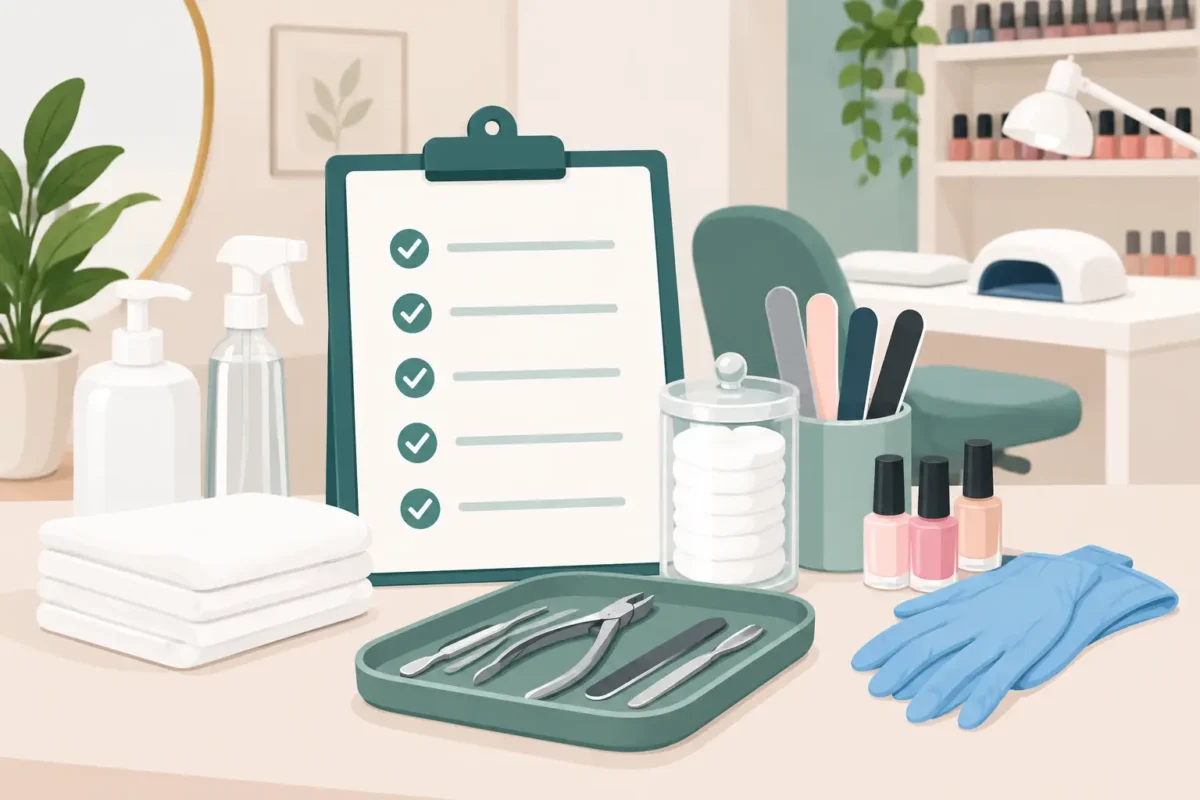
- Wash hands thoroughly before setting up. Keep hand cleanser available for both technician and client.
- Wipe down worktops, arm rests, trolley handles, lamps, UV/LED lamp controls, chairs and payment equipment with the appropriate cleaning and disinfecting product.
- Check that your ventilation and dust extraction are switched on, clean and working correctly. Empty or replace filters and collection bags in line with the equipment guidance.
- Prepare only the tools and products needed for booked services. Keep clean implements in a covered drawer, pouch or sealed container rather than exposed on the desk.
- Stock single-use essentials such as lint-free wipes, wooden sticks, files, buffers, gloves, couch roll and toe separators.
- Inspect reusable metal tools. They should be visibly clean, dry, undamaged and stored separately from used tools.
- Empty bins, fit fresh liners and make sure there is a separate, clearly managed area for used files, wipes and contaminated waste.
This is also the right time to check product presentation. Bottles with sticky necks, powder jars coated in dust and brushes left uncapped can make even a technically excellent service feel less professional. Clean packaging and controlled dispensing protect your stock as well as your image.
Between Every Client: The Non-Negotiables
The fastest way to lose hygiene control is to rush the reset. Schedule enough space between clients to complete it properly, especially if you offer removals, extensions or detailed nail art. Five extra minutes in your booking system can prevent a compromised service standard later in the day.
First, clear the station completely. Dispose of single-use items and remove used tools to a designated dirty-tool container. Do not place them beside clean stock, and do not carry them around the salon in your hands while greeting the next client.
Clean visible dust and residue from the desk, lamp, chair, arm rest and any reusable equipment used during the appointment. Then disinfect suitable surfaces according to the product label, including the required contact time. Spraying and wiping immediately may look productive, but it may not give the disinfectant time to work.
Wash or sanitise your hands before and after every service. Ask the client to do the same where appropriate. If gloves are required for a task, use a fresh pair for each client and change them if they become torn, visibly contaminated or you switch from cleaning duties back to a service.
For pedicure services, take extra care with footrests, bowls, basins and spa equipment. These areas need cleaning and disinfection after every client, not just at the end of the day. Follow the manufacturer procedure for removable parts, jets, filters and drainage components, as these can retain debris if neglected.
Tool Control: Where Good Intentions Become a System
Tool handling is the part of a hygiene routine clients may not fully understand, but it is where professional discipline matters most. Create a clear dirty-to-clean workflow in your salon. Used tools move in one direction only: from service station to dirty area, through cleaning and disinfection, then into clean storage.
Reusable metal tools should first be washed or cleaned to remove product and visible debris. They can then be disinfected using a product suitable for the tool and used exactly as directed. Rinse, dry and store only when the process is complete. Moisture left on tools can lead to corrosion and undermine your investment in professional equipment.
Porous items are different. Files, buffers, sanding bands, wooden sticks and many toe separators are generally best treated as single-client or single-use supplies unless the manufacturer clearly states otherwise. A low-cost disposable item is never worth risking cross-contamination or an awkward client conversation.
Brushes deserve their own routine. Remove product residue promptly using the correct brush cleanser for the system you use, reshape the bristles and store them protected from dust and light. Never use a brush that has been in contact with skin or a questionable surface directly back in a product pot.
Managing Products Without Contaminating Them
Nail products need hygienic handling as well as good application technique. Avoid double-dipping into jars or pots after an applicator has touched the client. Decant the amount you need where possible, particularly for lotions, scrubs, pigments and loose glitter. Use clean spatulas or disposable applicators rather than fingers.
Keep bottle necks clean and close lids promptly to prevent spills, dust and unnecessary light exposure. Gel products should remain away from direct sunlight and curing lamps when not in use. If a bottle, lid or brush becomes contaminated, clean the exterior before it returns to your display or trolley.
A tidy product setup also makes stock rotation easier. Check use-by dates, batch information where supplied, changes in texture or odour, and any damage to packaging. Quarantine products that appear compromised rather than trying to make them last for one more appointment.
End-of-Day Checklist for a Salon That Stays Ready
At closing time, give your salon the deeper reset that a between-client wipe cannot deliver. Clean and disinfect stations, lamps, chairs, trolleys, door handles, payment terminals and frequently touched storage areas. Mop floors or clean them using a method suited to the surface, paying attention to dust around desks and pedicure zones.
Process all reusable tools before leaving them overnight. Launder towels and reusable linens at an appropriate temperature and store clean stock separately from used laundry. Empty bins, remove waste from the service area and replenish essential disposables for the next day.
Finally, check your dust extraction, electrical tools and curing lamps. Remove dust safely, inspect cords and plugs for damage, and keep electrical equipment dry. Hygiene and equipment care work together: a well-maintained e-file or lamp is easier to clean and safer to use.
Keep a Record, Not Just a Routine
A written checklist is useful because it makes standards visible across a team. In a multi-tech salon or college environment, assign tasks by opening, between-client and closing duties, then initial or digitally record completion. This creates consistency when staff change, students rotate or the appointment book becomes intense.
Record product names and dilution instructions for your cleaning and disinfecting products, along with replacement dates for filters and any equipment maintenance. If an incident occurs, clear records show that hygiene was managed with care rather than left to memory.
A polished salon is not one that merely looks clean for social media. It is one where every technician knows exactly what happens to a tool, a file, a towel and a work surface after every client. Make that routine second nature, and clients will feel the difference before you have even opened the first gel polish.
