
Blog
Carbide vs Ceramic Bits: Which E-File Bit?
Nov
A removal appointment can be the quickest part of a salon day or the point where timing, comfort and finish start to slip. The carbide vs ceramic bits decision matters because each bit changes how your e-file feels in the hand, how efficiently it removes product and how much control you have around the natural nail. Neither is automatically the better choice. The right one depends on the enhancement, the service, your technique and the client sitting in front of you.
For professional nail techs, bit selection is not about working aggressively. It is about working cleanly, consistently and with a purpose. A well-matched bit helps protect the natural nail, reduce unnecessary filing and keep your service times commercially sensible without compromising your standards.
Carbide vs ceramic bits: the core difference
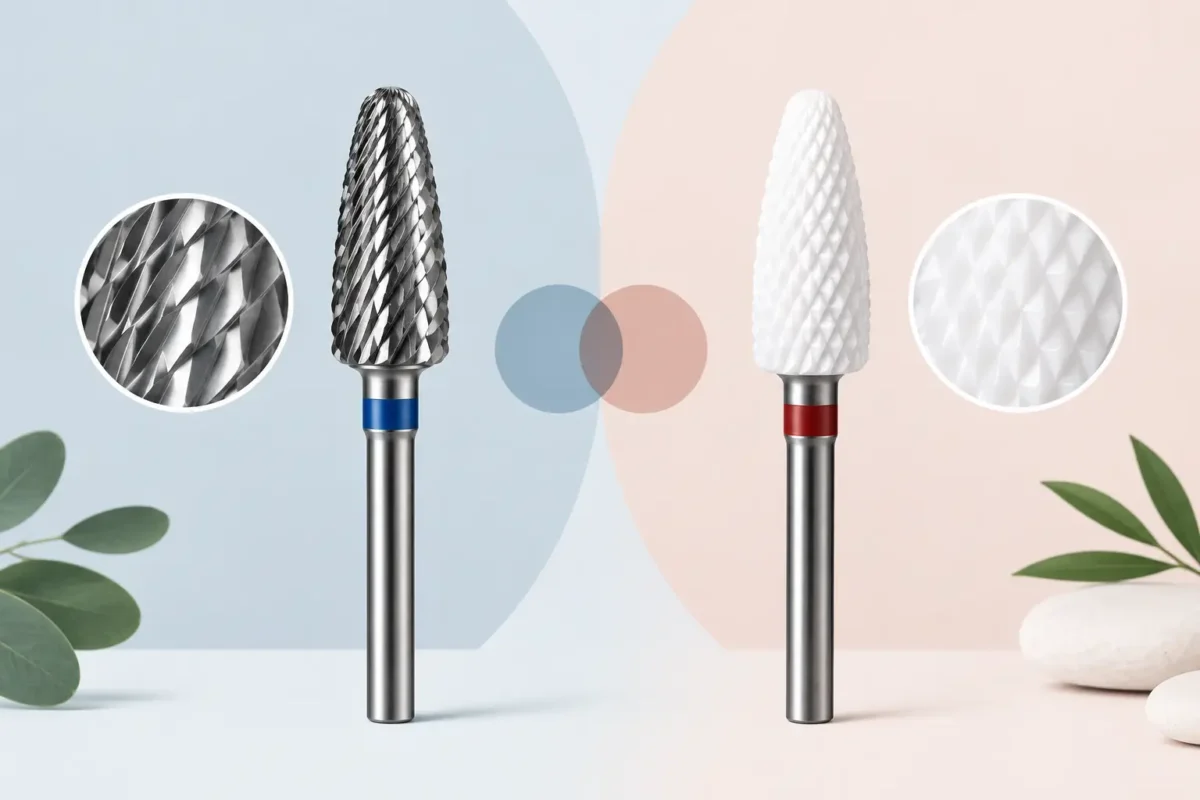
Carbide bits are usually made from tungsten carbide, a very hard metal designed with flutes or blades that cut through product. Rather than grinding away at enhancement, a carbide bit shaves material away in small, controlled pieces. This makes it a popular choice for reducing bulk in hard gel, acrylic and other dense enhancement systems.
Ceramic bits are made from a hard ceramic material and also feature flutes. They tend to feel smoother during use and are often chosen for controlled removal, refining and working on clients who are particularly heat-sensitive. Ceramic does not rust, which is a practical advantage in a busy salon hygiene routine, although it must still be cleaned and disinfected correctly between clients.
The material alone does not tell the whole story. Grit, flute design, bit shape, e-file speed, pressure and the technician’s movement all affect the result. A coarse ceramic bit can still remove product quickly, while a fine carbide bit can be appropriate for more delicate refinement. Think of the bit as part of a system, not a shortcut.
When carbide bits earn their place
Carbide bits are built for efficiency on hard product. If you are debulking a thick acrylic overlay, shortening enhancements or removing the majority of a hard gel set before a rebalance, a carbide bit can save a great deal of hand filing. Its cutting action is especially useful when product has built up through several infills or the client has chosen a longer, sculpted shape.
They are available in different cuts. A safety carbide generally has a smooth top designed to reduce the chance of catching the skin when working close to the cuticle area. A standard barrel offers broad surface contact for product removal across the nail plate, while a tapered barrel can give more access around the sidewalls and apex. These shapes are not interchangeable in every situation, so choose the profile for the area you need to work on.
The trade-off is that carbide bits can feel more direct. In untrained hands, too much pressure, a high speed or holding the bit in one place can create heat and remove product too quickly. Keep the bit moving, use light contact and work methodically from one zone to the next. The aim is to leave a thin, even layer of existing product when performing a rebalance, not to chase every trace of product down to the natural nail.
For left-handed technicians, direction also matters. Carbide flutes are commonly made for forward or reverse rotation. Using the correct direction helps the bit cut efficiently and prevents it from feeling as if it is dragging or bouncing. Check that your e-file and bit choice suit the way you work before bringing them into a paid service.
Where ceramic bits shine
Ceramic bits have become a salon favourite for good reason. They can offer a noticeably smooth filing experience, with less of the sharp cutting feel associated with some metal bits. Many technicians reach for ceramic during gel polish removal, controlled product reduction or services where a calmer, more comfortable client experience is the priority.
They are also a strong option for techs who prefer a lighter-feeling bit. The flutes clear away product effectively, helping you see the surface you are working on rather than filing through a cloud of dust. That visibility is valuable when you are approaching the base layer of a structured manicure or refining product near the cuticle.
Ceramic bits may generate less heat in the right conditions, but they are not heat-proof. Friction still comes from pressure, speed and poor technique. If a client reports warmth, stop immediately, assess your speed and pressure, and check whether the bit is clogged or unsuitable for the product. Client comfort is information, not something to work through.
Ceramic can be more brittle than carbide. Dropping a ceramic bit onto a hard salon floor may chip or crack it, and a damaged bit should never be used. Inspect every bit before service. If the flutes are worn, chipped, clogged beyond cleaning or no longer performing predictably, retire it.
Choose by service, not by trend
A practical e-file kit often includes both carbide and ceramic options because different appointments demand different tools. For fast reduction of a substantial acrylic or hard gel enhancement, a medium or coarse carbide can be the efficient choice. For gel polish removal, refining a structured overlay or working with a client who dislikes a more aggressive feel, a fine or medium ceramic may be more suitable.
Grit should follow the same logic. Coarse grit is for reducing bulk, not for natural nail preparation. Medium grit is a versatile salon workhorse for controlled removal and shaping product. Fine grit is best for refining, smoothing and working closer to the base layer. The finer you go, the more control you gain, but the longer the job may take.
Avoid treating a new bit as an instant upgrade. The fastest bit is only faster when you can use it safely. Beginners and students are usually better served by a fine or medium grit and a lower, controlled speed while they build confidence with hand position, angle and pressure. Training matters just as much as equipment.
Your natural nail is not a removal target
Whether you use carbide or ceramic, e-file bits should not be used to thin the natural nail during routine enhancement removal. Product should be reduced gradually, leaving a protective layer where appropriate, then finished with a hand file or buffer according to the service. If you cannot clearly distinguish product from natural nail, slow down and reassess.
This is also where quality education pays off. A professional e-file course teaches more than bit names. It develops the judgement to identify product, manage rotations, work safely around the cuticle and decide when hand filing is the better route.
Hygiene, maintenance and bit life
A great bit performs badly when it is poorly maintained. After each client, remove visible dust with a suitable brush before following your salon’s cleaning and disinfection procedure and the manufacturer’s instructions. Do not assume that a bit is hygienic simply because it looks clean.
Carbide bits need to be thoroughly dried after processing to help prevent corrosion, particularly if they have been exposed to moisture for too long. Ceramic bits will not rust, but they still need careful handling, proper cleaning and safe storage. A dedicated bit case protects flutes from damage and keeps your workstation organised.
Replace bits when their performance changes. A dull carbide may tempt you to press harder. A clogged ceramic may run hotter and leave an uneven surface. Both situations increase the risk of discomfort and poor service results. Fresh, properly maintained tools support faster appointments and a more polished finish.
Build a bit kit that supports your signature service
There is no need to buy every profile available. Start with a small, purposeful selection: a safety carbide for controlled bulk reduction, a ceramic barrel for comfortable product removal and a fine bit for refining enhancement product. Add specialist shapes only when your service menu and technique genuinely call for them.
Nail Gaga’s Fashion For Fingers approach is about pairing creative results with professional standards. Your e-file work may happen before the colour, chrome or nail art takes centre stage, but it sets the foundation for every premium finish you create.
The best bit is the one that lets you work with confidence, leave the natural nail respected and send each client out with nails ready for their next statement set.
