Blog
Gel Polish Allergy Guide for Nail Technicians
Nov
A gel polish allergy can turn a client’s favourite fresh set into an uncomfortable, worrying experience – and it can affect a technician’s hands and career too. This gel polish allergy guide is designed for professionals and serious home users who want fashionable nails without cutting corners on application, curing or hygiene.
Gel systems are brilliant when they are used as intended. The risk rises when uncured product repeatedly touches skin, a lamp does not cure the formula correctly, or a client continues wearing products after reacting. Prevention is not about fear. It is about precise technique, compatible professional products and knowing when to stop a service.
What a gel polish allergy can look like
Most genuine gel allergies are allergic contact dermatitis, often linked to acrylates or methacrylates in uncured nail products. These ingredients are fundamental to the performance of gel systems, but once a person becomes sensitised, even very small future exposures may trigger a reaction.
Symptoms do not always appear while the client is in the chair. They can develop several hours later or over the next few days, which is why a client may wrongly blame the last colour they wore rather than a repeated exposure pattern. Common signs include:
- itching, burning, tenderness or a rash around the nail folds, fingertips or hands
- swollen cuticles, red skin, cracking, blisters or weeping skin
- nails lifting from the nail bed, sometimes with soreness underneath
- a rash appearing away from the hands, such as on the eyelids, face or neck after product transfer
Irritation and allergy are not identical. Irritant contact dermatitis can result from over-filing, acetone, frequent hand washing, cleaning chemicals or product contact, and may settle once the trigger is removed. An allergy involves the immune system and can become a long-term issue. A technician should not diagnose either condition from a photograph or a quick message, but should treat all suspected reactions seriously.
Why gel polish reactions happen
The most common cause is contact between uncured gel and the skin. A tiny amount left in a sidewall, flooded into the cuticle area or transferred from a brush can matter, particularly when it happens repeatedly. Wiping it away is necessary, but the aim must be to prevent contact in the first place.
Undercuring is another major risk. Every gel formula is designed to cure under a suitable lamp with a specified output, wavelength range and cure time. Mixing brands can sometimes work cosmetically, but it is not a professional safety strategy. A colour that looks hard on the surface may still be insufficiently cured below it, especially if it has been applied too thickly.
Highly pigmented shades, glitters and very dark colours deserve extra care. Apply controlled, thin coats and follow the system instructions rather than adding time by guesswork or loading on product to save an application step. Old bulbs, damaged reflectors, a dirty lamp base, poor hand placement and the wrong lamp can all compromise curing.
There is also a difference between a bottle formulation and a complete system. Base coat, colour, top coat, lamp and prep steps should be selected for compatibility. Professional results come from consistency, not from a random mix of products that happen to fit on the nail desk.
Gel polish allergy guide for safer appointments
A safer service begins before the first coat. Check the client consultation record and ask whether they have ever experienced itching, swelling, peeling skin, lifting or a reaction after nail, lash, dental or adhesive products. A previous issue is not a cue to try another set with extra care. It is a reason to pause, record the information and recommend appropriate medical advice.
During prep, protect the surrounding skin. Remove non-living cuticle tissue gently, avoid aggressive e-file work and do not create breaks in the skin. Product is more likely to cause trouble when it reaches compromised skin. Keep your brush controlled, use the right amount of product and leave a fine, intentional margin around the cuticle and sidewalls.
If gel touches skin, remove it immediately and thoroughly before curing. Do not cure to “seal” it in, and do not pick at it after the lamp. Keep brushes clean, bottle necks tidy and work surfaces free from smears that could transfer onto gloves, tools or the client’s hands.
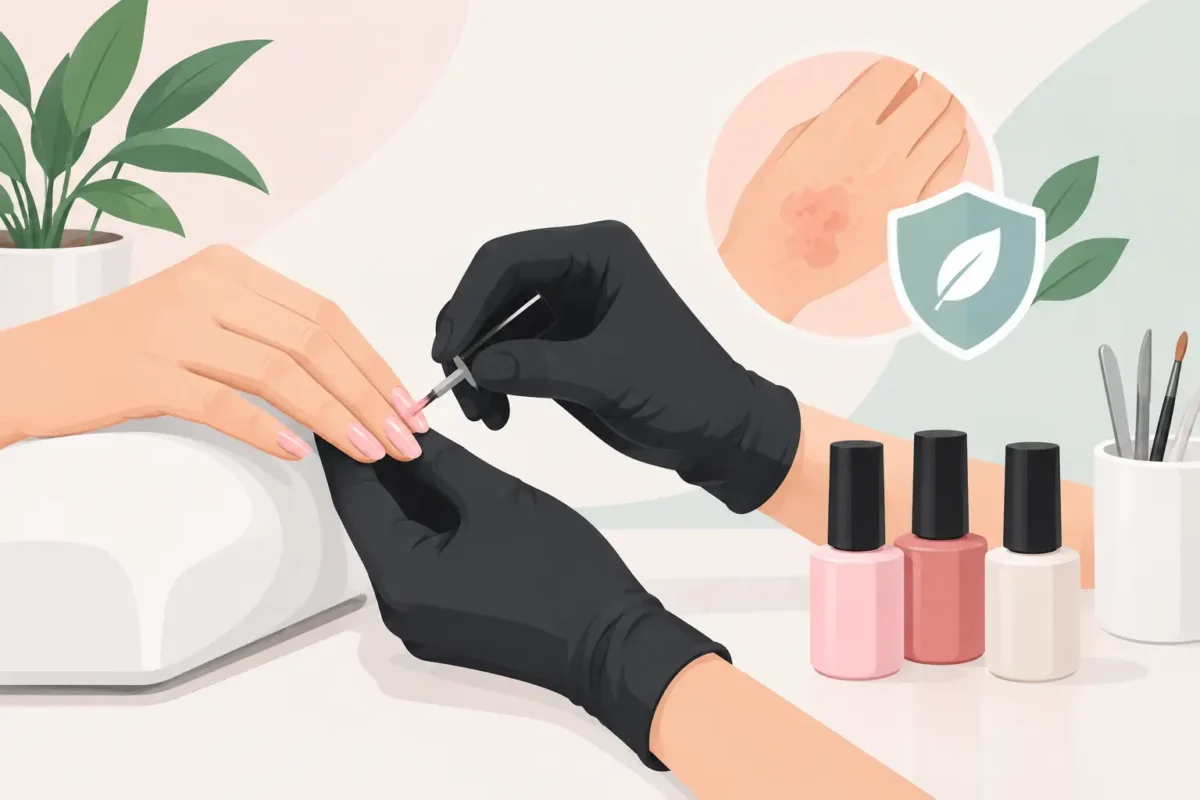
For technicians, nitrile gloves are a sensible part of routine contact protection, particularly during removal and cleaning. They are not an excuse to handle uncured product carelessly, as some ingredients can pass through gloves with prolonged exposure. Change gloves promptly if gel gets on them, avoid touching your face and wash hands carefully at the end of the service.
Good ventilation, dust extraction and clean removal practice also matter. They will not prevent an acrylate allergy on their own, but they support a more hygienic, comfortable working environment and reduce unnecessary exposure to dust and vapours.
Do not rely on DIY patch tests
A home patch test with gel polish is not a reliable way to prove a product is safe, and deliberately placing uncured product on skin can contribute to sensitisation. If allergy is suspected, the appropriate route is assessment by a healthcare professional, potentially including specialist patch testing arranged by a dermatologist. The professional should identify what the client reacted to, rather than assuming one ingredient or one shade is responsible.
What to do when a client reports a reaction
Respond calmly and take the report seriously. Ask the client to stop using all nail products and avoid reapplying gel, even if their nails look bare or uneven. Record the product names, batch details where available, service date, symptoms and when they began. Clear records protect the client, improve your salon procedures and help trace a pattern if one exists.
If product remains on the nails, do not advise the client to peel or force it off. Removal should be approached carefully to avoid further damage or contact with skin. If the skin is sore, blistered, broken or significantly swollen, the safest priority is medical advice rather than completing a cosmetic removal at home.
Encourage the client to speak to a pharmacist, GP or dermatologist, depending on the severity and local access to care. Urgent medical help is needed for facial swelling, breathing difficulty, widespread hives, severe pain, signs of infection or rapidly worsening symptoms. Those signs go beyond a routine nail concern.
Do not promise that a different brand, a HEMA-free formula or a longer cure will make future gel services safe for someone with a confirmed allergy. HEMA can be relevant, but it is not the only ingredient that may cause a reaction. A client’s clinician is best placed to advise them on future exposure, including implications for other beauty, medical or dental materials.
Protect your reputation with better process
A polished salon policy is as valuable as a polished set. Train every team member to recognise warning signs, keep consultation forms current and never work over damaged or inflamed skin. Build enough appointment time for neat application, correct curing and thorough cleaning. Rushing is expensive when it leads to a preventable reaction, a lost client or a technician developing hand dermatitis.
Use products exactly as directed, maintain lamps and replace equipment when performance is in doubt. Keep technical information available in the salon, including product safety documentation and batch records. For colleges and new technicians, this is where strong education matters most: flawless nail art begins with disciplined preparation and product control.
Fashion For Fingers should always feel good as well as look exceptional. When you make safety part of every brush stroke, clients gain confidence in your service and your skills stay ready for the next great set.