Blog
Dust Collector Review: What Nail Techs Need
Nov
A good dust collector earns its place on the desk long before it becomes a selling point. During acrylic removals, shaping and e-file work, airborne dust can settle across tools, product bottles and client clothing in minutes. This dust collector review focuses on what professional nail technicians should genuinely assess: extraction performance, filter quality, comfort, hygiene and whether the unit will keep pace with a busy appointment book.
Why a dust collector matters in a working salon
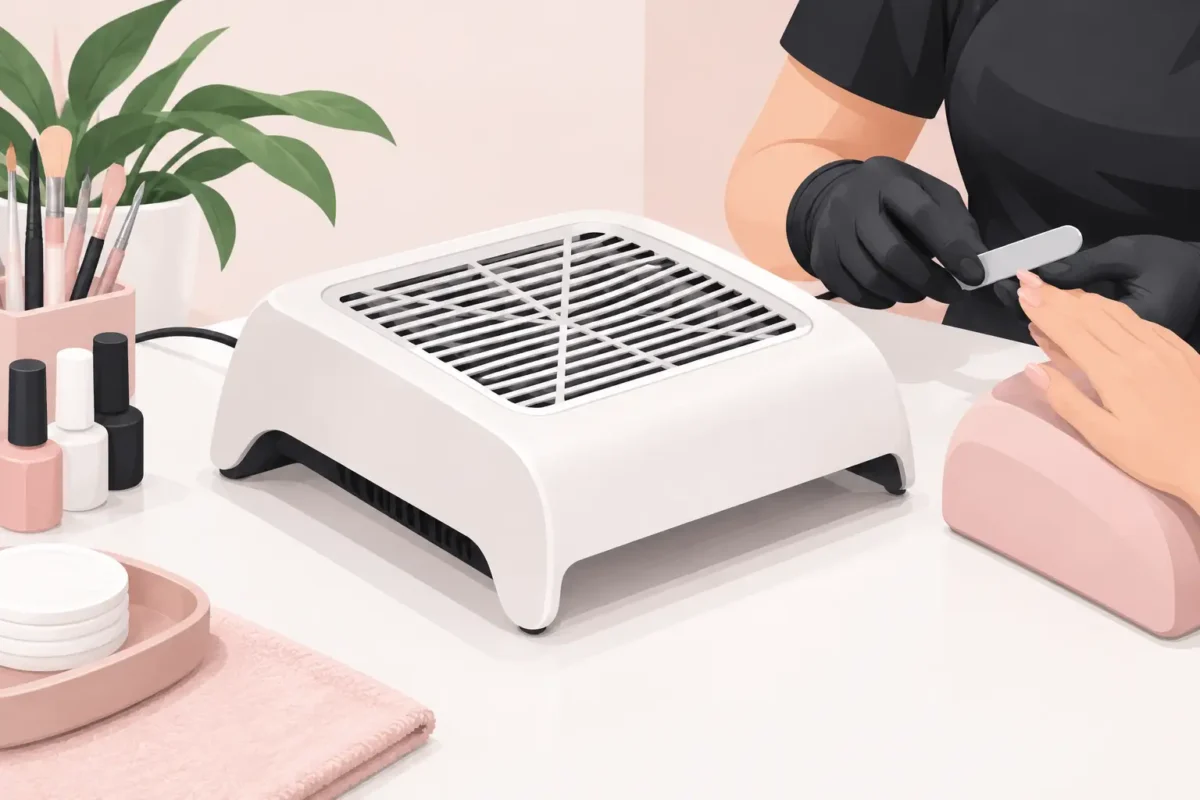
Dust is part of enhancement services, but it should not become the atmosphere of the salon. Fine particles created when filing acrylic, hard gel, builder gel or gel polish are easily disturbed by hand movements and ventilation. A collector positioned beneath the service area captures a significant amount at source, before it spreads over the workstation.
That has a practical effect on the finish of the service. Less debris settling onto tacky layers, chrome work or top coat means fewer frustrating interruptions. It also makes turnaround between clients faster, because the desk, arm rest and surrounding tools need less cleaning.
For clients, the difference is immediate. A quieter, cleaner-feeling treatment area signals care and professionalism. For technicians working six, eight or more appointments in a day, reducing visible dust at the desk can make the working environment feel far more manageable. A dust collector is not a substitute for proper salon cleaning, ventilation or suitable personal protective equipment, but it is a valuable part of a hygienic nail set-up.
Dust collector review: the features worth comparing
The best choice is not automatically the unit with the biggest suction claim. Suction needs to work across the full surface where you file, and it needs to remain useful as the filter collects dust. Look at the whole design rather than one headline specification.
Suction and capture area
A collector should pull dust down efficiently while you work in a natural position. If it only performs well when the client’s fingertips sit directly over one small vent, it can become awkward for detailed cuticle work, sidewall refining and thumb filing.
A broad intake area is particularly helpful for salon services, because hands do not remain perfectly still. Test the likely working position in your mind: will the client be comfortable resting their hand there, and can you maintain your normal filing angle? Strong extraction is useful, but an uncomfortable set-up is unlikely to be used properly all day.
Variable speed is another worthwhile feature. A lower setting may be enough for light filing and finishing work, while removal appointments and heavy acrylic refinement may call for more power. The trade-off is noise. Higher suction generally creates more sound, so a machine that offers controlled settings gives you more flexibility during client conversations.
Filter type and ongoing performance
The filter is where a dust collector proves its value over time. A reusable fine filter can be a cost-effective choice when it is easy to remove, clean and refit correctly. Replaceable filters can make maintenance straightforward, but the long-term cost and availability of replacements should be factored into the purchase.
Avoid judging a unit only when its filter is fresh from the box. Dust collection drops if maintenance is ignored. Choose a design that makes cleaning realistic between busy days rather than one that requires fiddly dismantling. If technicians cannot access the filter quickly, it is more likely to be left too long.
A fitted cover or grille is also worth checking. It should sit securely and prevent larger debris from entering the fan area, while still allowing effective airflow. Loose covers, weak catches and gaps around the filter may seem minor at first, but they affect both cleaning and confidence in daily use.
Noise, heat and desk comfort
Professional equipment needs to support the client experience, not dominate it. A dust collector will make some noise, especially at its highest setting, but the sound should feel consistent rather than rattly or strained. Excessive vibration can travel through the work surface and make precision work less pleasant.
Consider the physical footprint too. A compact collector can suit a smaller beauty room or mobile kit, but it must still give the client enough wrist support. A larger unit may provide a more stable rest and wider collection zone, although it uses more valuable desk space. Measure your table before ordering, especially if you also use an e-file, lamp, manicure bowls and product displays.
Heat is another real-world consideration. After consecutive appointments, a quality unit should not feel as though it is struggling. Follow the manufacturer’s usage and cleaning guidance, keep vents clear, and give the machine the care you would any electrical salon tool.
Which nail services benefit most?
Dust collectors are especially useful for acrylic and hard gel services, where filing can create a visible cloud around the enhancement. They are equally valuable during infills, rebalances, removals and e-file prep, when the old product must be reduced safely and neatly before new application.
For natural nail services, the benefit may be less dramatic but still welcome. Shaping, buffing and surface preparation create fine debris that can interfere with a polished workstation. Nail art technicians working with pigments, glitter and chrome powder may also appreciate a collector as part of a disciplined clean-down routine, although loose powders should be handled carefully to avoid unnecessary waste.
If your menu is mainly gel polish with minimal filing, a collector can still elevate your working area, but it may not need the same power or capacity as a technician completing full sets and removals all day. Match the specification to your most demanding regular service, not the occasional appointment.
Getting the set-up right
Position the collector centrally so the intake sits beneath the hand being worked on, rather than pushed to the edge of the desk. Keep cords organised and away from the client’s arm area. A stable surface matters: placing a collector on a wobbling table makes vibration worse and can affect your filing control.
Before each appointment, check that the filter is seated correctly and that the vents are clear. Empty or clean the system according to the manufacturer’s instructions, never by aggressively shaking dust around the salon. Wipe the outer casing with an appropriate cleaner and keep product spillages away from electrical parts.
It is sensible to build this into your existing service routine. Prepare the desk, sanitise tools, check your lamp and e-file, then switch on the collector before filing begins. That consistency is what turns equipment into a professional standard rather than an occasional extra.
Common buying mistakes to avoid
The cheapest option can be tempting when fitting out a new desk, but weak suction and difficult filters soon become false economy. A collector that leaves dust across the desk creates more cleaning time, more client discomfort and more pressure to replace it early.
It is also easy to buy based on appearance alone. A sleek casing may suit your salon aesthetic, but the key questions are whether it captures dust where you work, whether the filter is practical to maintain, and whether it feels comfortable for different hand sizes. Ask about replacement filters before purchase, not when the original one reaches the end of its life.
Finally, do not expect one machine to solve every aspect of salon hygiene. Keep surfaces clean, store products correctly, dispose of waste responsibly and maintain good airflow in the treatment space. A collector works best as part of a complete professional routine.
The right investment for your desk
For a newly qualified technician, a reliable collector can set better habits from day one. For an established salon, upgrading tired equipment can improve workstation presentation and make high-volume filing services easier to manage. Nail Gaga professionals know that polished results are built on the details clients notice and the standards they do not have to question.
Choose a dust collector that suits your service menu, desk size and maintenance routine, then use it consistently. Cleaner working, more comfortable appointments and a sharper salon image are all worth protecting with every set you create.